
Water-in-water and water-in-sand are both multicolor finishes that imitate stone. They are often sold under similar names, and buyers sometimes treat them as interchangeable. On a real facade they are not. One gives a flat, polished stone look; the other gives a thicker, grainy texture. The choice affects the design, the substrate preparation, the application method and how the wall ages.
This guide explains the difference in plain terms and helps you choose the right finish for a project.
What water-in-water coating is
Water-in-water is a multicolor coating often called liquid granite. The colour flecks are suspended in a water-based carrier and spray onto the wall as a thin, flat film. Once cured, it looks like polished granite or marble, with clear colour separation and a relatively smooth surface.
Because the film is thinner and flatter, it suits large, modern facades where a clean stone look matters. It also picks up less dirt on the surface than a deep texture, but small substrate defects are more visible.
How the colour flecks work
The flecks are made in separate colours and suspended in a water-based gel. When sprayed, they land side by side and form a continuous film with distinct colour islands. The final look depends on the size and density of the flecks, the spray pattern and the number of passes. A small change in any of these can change the appearance, which is why a site sample panel matters.
Where it works best
Large flat elevations, office buildings, apartment towers and modern residential blocks. It is less suitable for a wall with many small patches or repairs, because a flat finish shows every change in the substrate.
What water-in-sand coating is
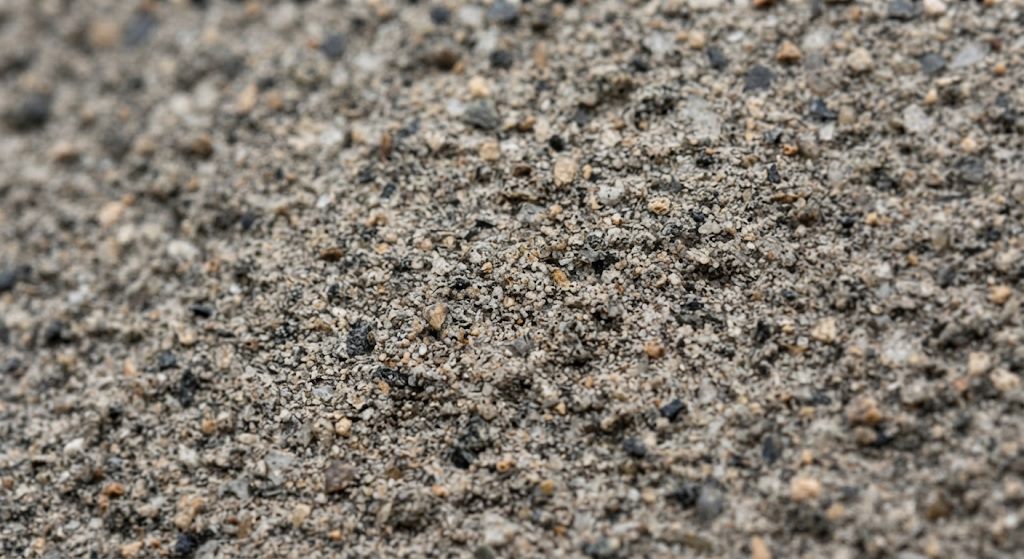
Water-in-sand is a thicker, sand-textured multicolor coating. The finish has a grainy surface and a more pronounced stone feel. It is often used to imitate sandstone or rough granite, and it hides small cracks, patches and surface variation better than a flat finish.
The heavier texture gives a more traditional or natural look. It also traps a little more dust, so the wall may need cleaning more often in dusty or coastal areas.
How the texture is built
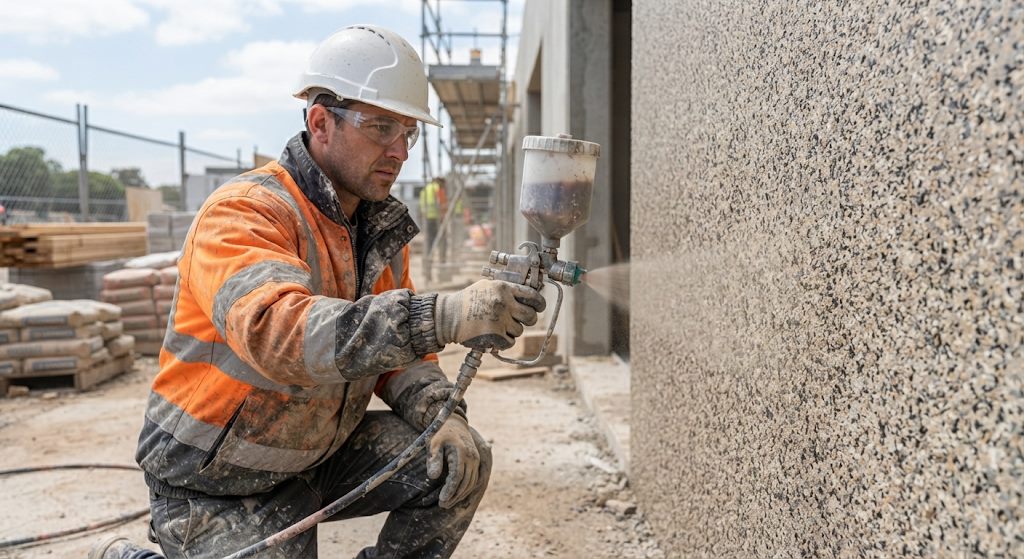
The coating contains mineral filler and a thicker binder system. It is sprayed in heavier passes, and in some systems trowelled to compact the surface. The grain comes from the filler, not from a printed pattern, so it stays visible as the wall ages.
Where it works best
Villas, low-rise buildings, repaired walls and designs that want a natural stone feel. It is less suitable for a very smooth modern facade that needs a uniform sheen, because the texture deliberately breaks up the light.
Quick comparison
| Point | Water-in-water | Water-in-sand |
|---|---|---|
| Look | Flat, polished granite or marble | Textured, sandy stone |
| Film | Thin | Thicker |
| Surface | Smooth | Grainy |
| Hides defects | Less | More |
| Application | Spray, careful control | Spray or trowel, more build |
| Best for | Modern high-rise and large flat facades | Villas, textured facades, repaired walls |
Appearance and design
Water-in-water reflects light more evenly. The colour flecks sit close to the surface, so the wall reads as a flat stone panel. That works well on office buildings, apartment towers and large elevations where a uniform look is wanted.
Water-in-sand breaks up the light. The grain creates small shadows, so the wall looks warmer and more natural. It suits residential projects, low-rise buildings and facades with more detail.
Performance on a real wall
Both finishes are water-based and can be formulated for exterior use, but they behave differently. A flat water-in-water film shows substrate movement and small defects more clearly. A textured water-in-sand film hides them, but the deeper surface holds more dust.
In strong UV, the binder and pigment quality matter more than the name of the finish. In cold climates, the coating needs to stay flexible through freeze-thaw cycles. In humid or coastal areas, resistance to mould, algae and salt is important. Ask for the right system for the climate, not just the colour.
How the two finishes age
A flat water-in-water facade shows its age through changes in the surface. Chalking, colour shift and dirt build-up are easier to see because the finish reflects light evenly. A textured water-in-sand facade hides small marks, but dirt can settle into the grain and make the wall look duller over time.
Repairability is another difference. A patch on a flat finish is harder to blend; the repair can show as a different sheen or a slightly different pattern. A textured finish hides small patches better, but matching the texture and colour still takes care. Keep a small quantity of material from the same batch for future touch-ups.
Application differences
Water-in-water is usually sprayed in several passes. The operator controls the pattern and the film thickness, and the wall needs a very even base because the finish is flat. Water-in-sand also sprays, but the film is built up more and can be trowelled in some systems. The texture hides small application marks, but the film still has to be uniform.
Both need a sound, dry substrate and the correct primer. A sample panel is essential. It shows the final colour, the texture and the coverage before the full facade is committed.
Repair and maintenance
- Keep a small quantity of the same batch for touch-ups.
- Clean flat finishes with a soft brush and mild detergent; avoid abrasive pads.
- Use low pressure on textured finishes so dirt is not driven into the grain.
- Rebuild small damage in steps: primer first, then the finish in thin passes.
- Inspect after the first rainy season and then every few years.
Planning the job
Order enough material from one batch to finish the elevation, especially on a visible facade. Colour and texture can vary slightly between batches. Plan the scaffold time around the weather, because both finishes need a dry window and a substrate within the supplier’s temperature limits.
Build a sample panel on site, not just a small board in the workshop. The panel should show the primer, the finish and the number of passes. It gives the client a realistic view of the colour and texture, and it gives the applicator a target for the full job.
Substrate and primer
Neither finish fixes a failing wall. Cracks, hollow render, damp and efflorescence have to be repaired first. The wall should be clean, dry and within the moisture and pH limits given by the coating supplier. An alkali-resistant primer helps the finish bond and protects it from the alkaline substrate.
Which one should you choose?
Choose water-in-water when the design calls for a flat, polished stone look on a large, sound facade. Choose water-in-sand when you want a more textured, natural finish and the wall has minor defects to hide.
Climate and maintenance also matter. A dusty site favors a flatter finish that cleans easily. A wall with small cracks favors a textured finish that hides them. A high-rise with a strict visual line favors water-in-water. A villa or a repaired elevation often favors water-in-sand.
High-rise office or apartment tower: water-in-water gives the uniform, flat stone look that large elevations usually need. The substrate must be very even, because the finish does not hide defects.
Villa or low-rise residential: water-in-sand gives a warmer, more natural surface and hides small repairs. It is a practical choice for walls that have been patched.
Cold climate: either finish can work if the binder stays flexible through freeze-thaw cycles. The primer and the substrate condition matter as much as the texture.
Dusty or coastal site: a flatter finish is easier to wash. A deep texture can hold dust and salt, so plan more frequent cleaning.
Common mistakes
- Applying either finish over a damp or dirty wall.
- Skipping the primer to save a step.
- Using a flat finish on a wall with visible defects.
- Using a heavy texture on a wall that still has active cracks.
- Judging colour from a small sample instead of a site panel.
- Letting the applicator thin the product beyond the data sheet.
FAQ
What is the main difference between water-in-water and water-in-sand?
Water-in-water gives a flat, polished stone look with a thinner film. Water-in-sand gives a thicker, grainy texture that hides more defects.
Which one lasts longer?
Life depends on the binder, the climate, the substrate and the application, not just the finish type. A well-applied system on a sound wall will outlast a cheap system on a bad wall.
Can they be used on the same building?
Yes, on different elevations or as design features, as long as both are applied over compatible primers and the details are planned.
Which is better for hot climates?
Both can work if the system is UV-stable and the colour is suitable. Flat finishes stay cleaner in dust; textured finishes hide defects but may need more washing.
Can water-in-water be applied over water-in-sand?
Only after the old coating is sound, clean and tested for adhesion. A heavy texture may need to be levelled first. A sample panel will show whether the new finish hides or highlights the old texture.
How many coats are needed?
It depends on the product and the desired texture. Follow the data sheet and build a sample panel. Most systems use a primer plus multiple finish passes.
Final word
Water-in-water and water-in-sand are different tools. Match the finish to the facade, the substrate and the climate, and both can give a durable stone look. Match them badly, and the wall will show it within a season or two.
Five Lakes Coatings has made water-based coatings since 1984. Our range includes multicolor water-in-water paint, real stone paint and alkali-resistant sealing primer. For help choosing a system for your project, send us the facade details. If the wall is peeling, see our guide to exterior paint peeling in hot, dry climates.