
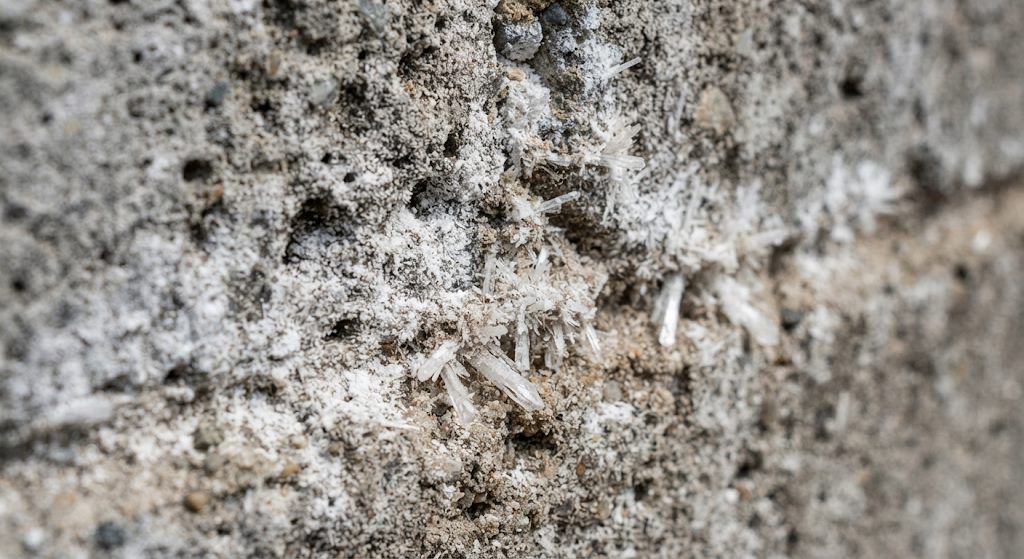
White powder on a concrete wall is not dirt, and it is not a paint defect. It is salt that water has carried to the surface and left behind when it dried. You can brush it off, but it will come back until the water stops moving through the wall.
This guide covers what efflorescence is, where the water usually comes from, how to clean the wall without making it worse, and which primer to use before repainting.
What efflorescence actually is
Concrete, mortar and render contain soluble salts. Water passing through the material dissolves those salts and carries them to the surface. The water evaporates, the salts stay, and they form the white, powdery or slightly crusty deposit you see.
Three things have to be present at the same time: salts in the material, water to dissolve them, and a path to the surface. Remove any one of the three and efflorescence cannot form. That is why cleaning without fixing the water never lasts.
Why concrete and render are prone to it
Cement, sand and the water used in the mix all contain some soluble salts. New concrete and render also hold a lot of construction moisture, which can take weeks or months to leave the wall. Add rain, ground water or a plumbing leak and the salts have a way out.
Render and mortar are porous by design. That is useful for the wall, but it also means water can travel through them. The surface where the water evaporates is where the white deposit appears.
Where the water usually comes from
Before you touch a brush, look for the water. On most buildings it comes from one of these places:
- Roof leaks, blocked gutters and overflowing downpipes
- Cracks in render or masonry that let rain in
- Rising damp where there is no working damp course
- Plumbing leaks and wet rooms on the other side of the wall
- Ground levels and drainage that send water toward the wall
- Irrigation and sprinklers hitting the facade
- Condensation and poor ventilation inside the building
- Construction moisture in new concrete and render
The pattern often points to the source. Salts along the bottom of a wall usually mean rising damp. White deposits around windows and doors often mean a leak or a failed seal. A whole elevation that keeps producing salts is often still drying out from construction.
How to tell it from mould and paint chalk
| What you see | Efflorescence | Mould | Paint chalk |
|---|---|---|---|
| Colour | White or grey-white | Green, black or brown | White |
| Texture | Powdery or crystalline | Fuzzy or slimy | Fine powder on the surface |
| Water test | Dissolves in water | Does not dissolve | Comes from the paint film |
| Where it appears | Where water evaporates | Damp, shaded areas | Where the coating is aging |
Efflorescence is white or grey-white and powdery. It dissolves in water. Mould is usually green, black or brown and feels fuzzy. Paint chalk is white too, but it appears when you rub the coating and it comes from the paint itself, not from inside the wall.
Why painting over it does not work
A coat of paint does not stop salt. If salts are still forming, they build up under the film and push it off. The film blisters, cracks and peels, and the white powder comes back. On a strongly alkaline wall, the paint binder can also soften and lose grip.
A heavy, vapour-tight coating makes the problem worse when moisture is still present. It traps water in the wall, so the salts move to the next weak point or spread across the surface.
Check the water before you clean
A few simple checks tell you whether the wall is ready for any coating.
Watch how fast it returns. Dry brush a small patch and see how quickly the white deposit comes back. Fast returns mean water is still active.
Test for moisture. Tape a clear plastic sheet to the wall for a day. If water collects under it, the wall is releasing moisture.
Check the surface pH. Dampen a patch and press a pH strip against it. A high reading means the wall is still alkaline and needs an alkali-resistant primer.
Look at the building. Check gutters, downpipes, roof edges, ground levels, cracks and any plumbing on the other side of the wall. The source is often outside the patch you are looking at.
Fix the water first
This is the part most repainting jobs skip. Clear the gutters, repair the roof, tighten the downpipes and move ground water away from the wall. Seal cracks that let rain in. Fix leaking pipes and wet rooms. If rising damp is the cause, the wall needs a working damp course, not another coat of paint.
Then give the wall time to dry. New render can hold moisture for weeks. Do not rush the coating because the surface feels dry; the inside of the wall may still be wet.
If you cannot find the source, a waterproofing specialist is usually cheaper than repainting the same elevation every year.
Clean the wall correctly
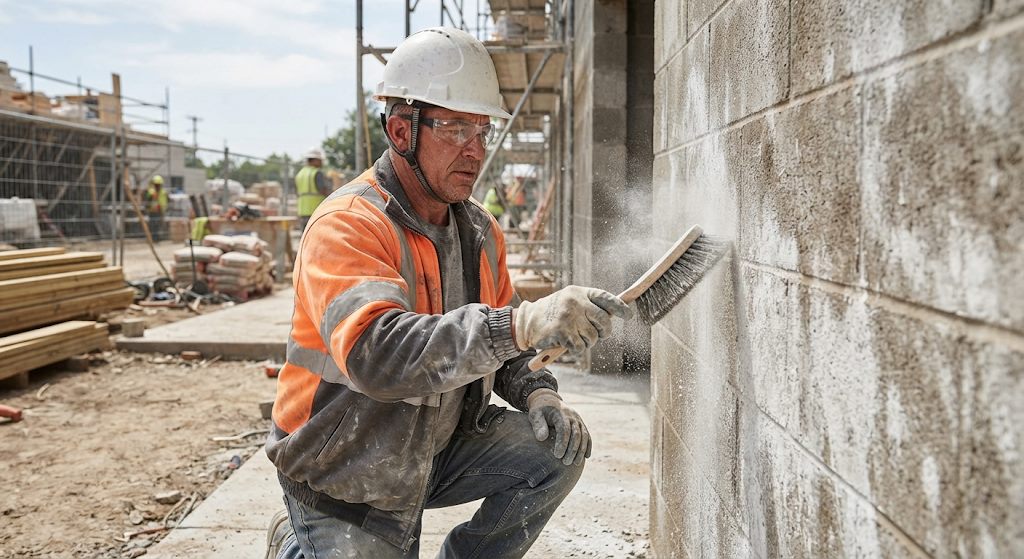
- Dry brush first. Use a stiff brush and work from the top down. Vacuum the powder rather than washing it back into the wall.
- Rinse lightly if needed. Low pressure, clean water, and no soaking.
- Use a mild acid wash for stubborn salts. A diluted vinegar solution can dissolve the deposits. Test a small area first, rinse well and let it dry.
- Do not use bleach. It can damage the coating and adds more salts to the wall.
- Do not wash the salts deeper. Too much water pushes them back into the render.
- Let the wall dry and watch it. If the white deposit returns quickly, the water source is still active and painting should wait.
The right primer for an alkaline wall
Once the wall is clean, dry and the water is under control, an alkali-resistant primer is the first coat. It helps the topcoat bond and reduces the effect of the alkaline surface on the paint binder.
Choose a breathable primer, not a heavy vapour-tight sealer, if there is any chance of residual moisture. Apply it to the whole elevation, not just the patches, and do not thin it to stretch coverage. Finish within the recoat time given by the manufacturer.
Choosing the topcoat
A breathable acrylic exterior paint is a sensible choice for a wall that has had moisture problems. One primer coat and two finish coats are the normal system. Avoid heavy waterproof coatings on a wall that is still releasing moisture; they trap water and push the problem elsewhere.
Textured finishes such as real stone paint or water-in-sand can be used, but only after the wall is dry and the salts have stopped. They add film build and texture, but they are not a cure for moisture. A heavy finish over a damp wall will fail faster than a flat paint.
When to call a specialist
Call a waterproofing specialist if the source cannot be found, if rising damp is suspected, if the wall keeps producing salts after two cleaning cycles, or if there are structural cracks. Repeated repainting is the most expensive way to deal with a water problem.
Prevention checklist
- Keep gutters and downpipes clear.
- Fix roof leaks before they reach the wall.
- Move ground levels and drainage away from the facade.
- Seal cracks that let rain in.
- Repair plumbing leaks promptly.
- Ventilate wet rooms and kitchens.
- Let new render dry before coating.
- Clean salts before priming, not after.
- Use an alkali-resistant primer on concrete and render.
- Check the wall again a few weeks after coating.
FAQ
Can I paint over efflorescence?
No. The salts will push the new film off and the white powder will return. Clean the wall, fix the water and prime it first.
Will it come back after painting?
Only if water is still moving through the wall. If the source is fixed and the wall is dry, the salts stop forming. If the source remains, no coating will keep them out.
Is vinegar safe for cleaning?
A diluted vinegar solution is a common mild treatment for salt deposits. Test a small area, rinse well and allow the wall to dry. Do not mix it with bleach.
How long should I wait before painting?
Wait until the wall is dry inside, the white deposit has stopped returning, and the surface pH is acceptable for the coating. New render can take weeks to dry, so test rather than guess.
Does primer stop efflorescence?
No. Primer improves adhesion and helps with alkalinity. It does not stop water or salt movement. The water source has to be fixed first.
Final word
Efflorescence is a symptom, not the problem. Find the water, let the wall dry, remove the salts and then build a breathable coating system. That is the only way to stop the white powder coming back.
Five Lakes Coatings has made water-based coatings since 1984, including alkali-resistant sealing primer, exterior wall emulsion paint and real stone paint. For a wall with recurring salts, send us the project details and we will recommend a system. If peeling is the main problem, see our guide to exterior paint peeling in hot, dry climates.